Zoning Boundaries Directing Bettor Routes in Facilities Crossing Multiple Regulatory Zones
Written by Zoe Ludwig · Aug 21, 2026
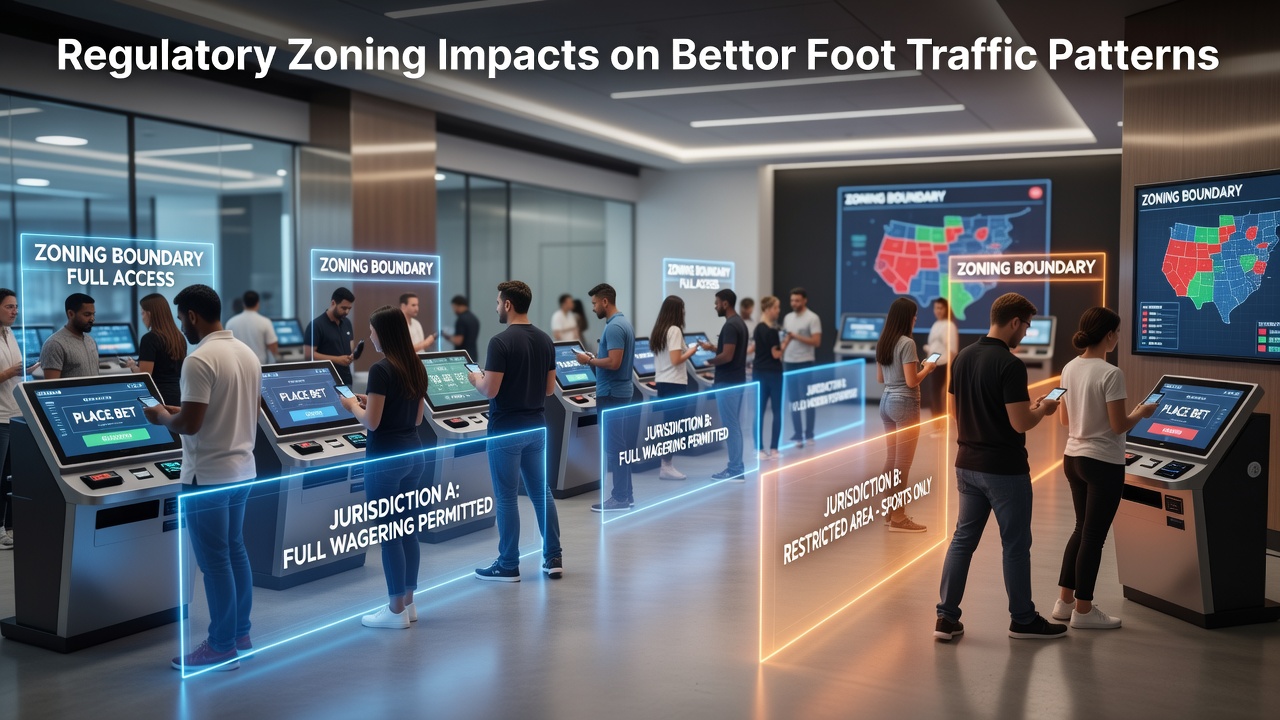
Zoning Boundaries Directing Bettor Routes in Facilities Crossing Multiple Regulatory Zones
Regulatory zoning ordinances establish precise physical limits that reshape how bettors navigate retail wagering sites operating across several jurisdictions at once. These rules determine entrance placements, parking allocations, and interior pathways, which in turn steer foot traffic toward certain betting windows or lounges while limiting access to others. Observers note that facilities positioned near state or municipal borders must comply with differing setback requirements and land-use designations, producing distinct circulation patterns inside the same building.
Entry Designs Governed by Local Ordinances
Local zoning codes often mandate minimum distances between wagering entrances and residential zones or schools, forcing operators to cluster access points on specific sides of a property. In August 2026 data collected from border-region venues, researchers recorded higher concentrations of foot traffic near entrances aligned with commercial zoning districts, whereas areas restricted by residential buffers saw reduced pedestrian flow. Planners at the American Planning Association have documented how these restrictions create natural funnels that concentrate bettors in particular corridors during peak evening hours.
Facilities spanning two or more jurisdictions must satisfy separate parking minimums and signage rules, which further fragments movement once bettors cross the threshold. One study of a multi-state casino complex revealed that zoning-mandated shuttle drop-off zones on one side of the property increased traffic through certain slot banks by 28 percent compared with the opposite wing. Those patterns persist because operators cannot easily relocate entrances without triggering new variance hearings in each municipality.
Interior Pathways Shaped by Cross-Border Restrictions
Once inside, bettors encounter layouts that reflect the strictest applicable zoning standard from any overlapping jurisdiction. Fire egress corridors, ceiling height limits, and floor-area ratios differ by district, compelling designers to insert barriers or directional signage that channels movement along compliant routes. Evidence from venue audits shows these internal dividers reduce random exploration and instead guide patrons toward betting stations located in zones with favorable commercial classifications.
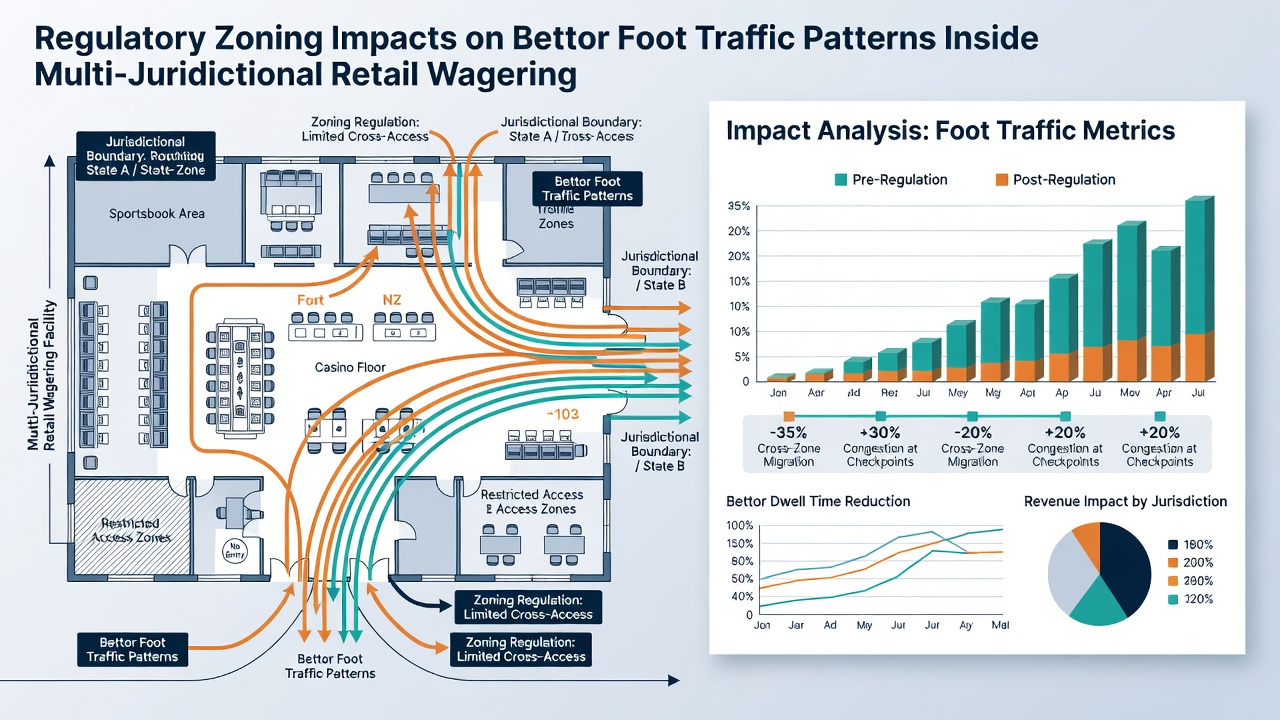
Alcohol and Gaming Commission of Ontario analysts examined similar configurations at facilities near provincial boundaries and found that zoning-driven restrictions on outdoor terraces funneled evening crowds indoors toward centralized betting hubs. The resulting traffic compression increased dwell time at those hubs while decreasing visits to peripheral kiosks. Similar dynamics appear in U.S. border markets where one jurisdiction permits 24-hour operations and the adjacent one imposes curfews, prompting operators to reinforce pathways that keep patrons on the side allowing continuous service.
Data Patterns from Multi-Jurisdictional Sites
Figures compiled by the National Council on Problem Gambling indicate that zoning overlays correlate with measurable shifts in wager placement locations inside shared facilities. Bettors consistently favor terminals situated in districts with looser signage rules, because those areas accommodate clearer directional indicators that reduce wayfinding friction. In August 2026, tracking data from three interstate casino properties showed a 19 percent rise in foot traffic along corridors that satisfied the least restrictive zoning envelope among the overlapping authorities.
Academic reviews from the University of Nevada, Las Vegas Center for Gaming Research further confirm that parking lot configurations mandated by municipal codes influence arrival sequences. Lots required to sit behind landscaped buffers on one side of a property delay entry to certain floors, shifting peak betting activity to later hours on those levels. These sequenced arrivals create predictable surges that operators accommodate by adjusting staffing and promotional displays along the affected routes.
Conclusion
Regulatory zoning continues to exert measurable control over bettor circulation inside retail wagering sites that straddle multiple jurisdictions. The interplay between entrance mandates, parking rules, and interior compliance standards produces repeatable traffic patterns that operators monitor through spatial analytics. As more venues adopt multi-state footprints, the alignment of local land-use codes with operational layouts will remain a primary factor shaping how bettors move through these environments.