Regulatory Ripples: How State Licensing Frameworks Shape Retail Venue Clustering and Odds Availability in Emerging Markets
Written by Willa Vogel · Aug 4, 2026
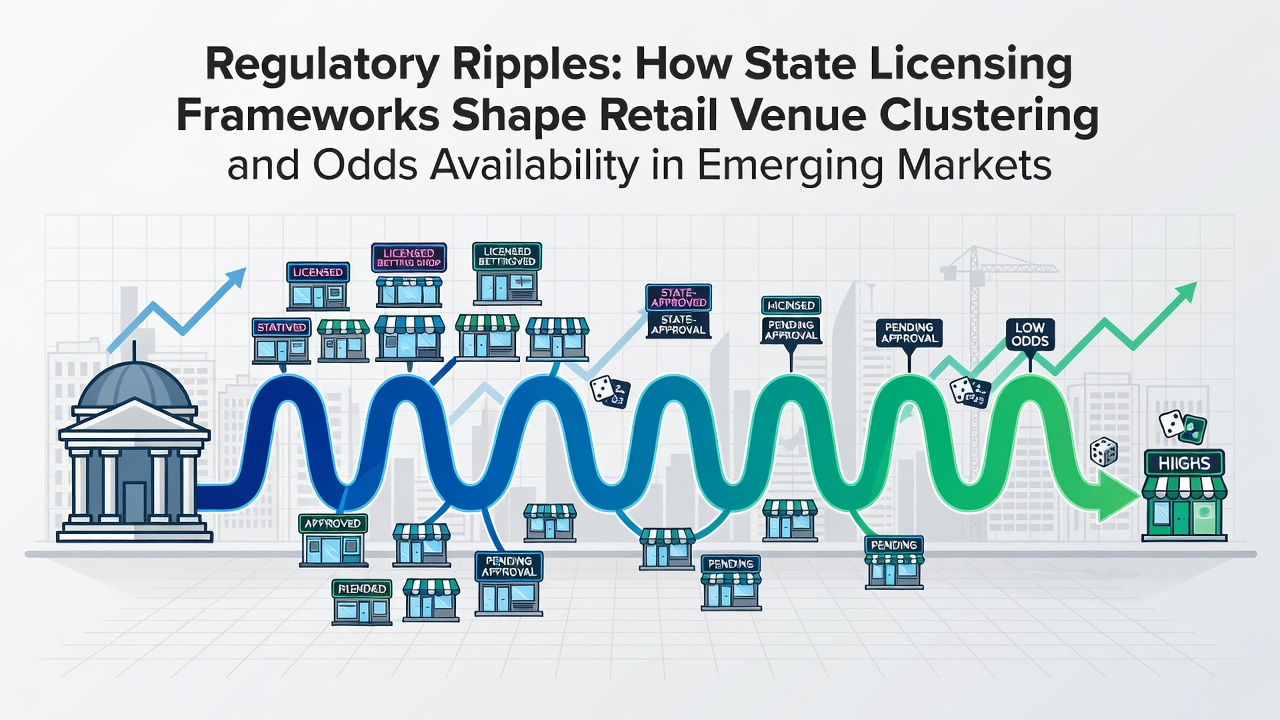
Regulatory Ripples: How State Licensing Frameworks Shape Retail Venue Clustering and Odds Availability in Emerging Markets
State licensing frameworks in emerging sports betting markets determine the physical locations where retail venues can open, which creates distinct patterns of clustering while also affecting the range of odds that operators make available at those sites. Licensing requirements often include minimum distance rules from schools, population density thresholds, and caps on the total number of permits issued per region, and these rules push operators toward specific urban corridors or commercial zones where multiple approvals cluster together. Data from regulatory filings shows that in states with strict per-county caps, venues concentrate within a handful of approved municipalities rather than spreading evenly across broader territories.
Licensing Caps and Geographic Clustering Patterns
Emerging markets that introduced retail sports betting after 2023 frequently adopted licensing models requiring applicants to demonstrate access to high-traffic locations, and this approach has led to noticeable concentrations along major highways and near existing entertainment districts. Observers note that when states tie license awards to local zoning approvals, operators compete for the same limited commercial parcels, resulting in clusters of three or four venues within a single zip code while surrounding counties remain without any approved sites. Figures released in August 2026 by several state gaming commissions reveal that over 70 percent of new retail licenses went to just four metropolitan areas in the most recent application round, confirming the clustering effect driven by regulatory design.
Those who've examined permit data across multiple jurisdictions find that distance restrictions between venues further reinforce these patterns, since rules mandating at least five miles of separation between licensed locations force operators to select from a smaller pool of eligible sites. The outcome appears in maps published by state agencies where approved venues sit within tight geographic pockets rather than dispersing into suburban or rural zones.
Impact on Odds Availability and Market Competition
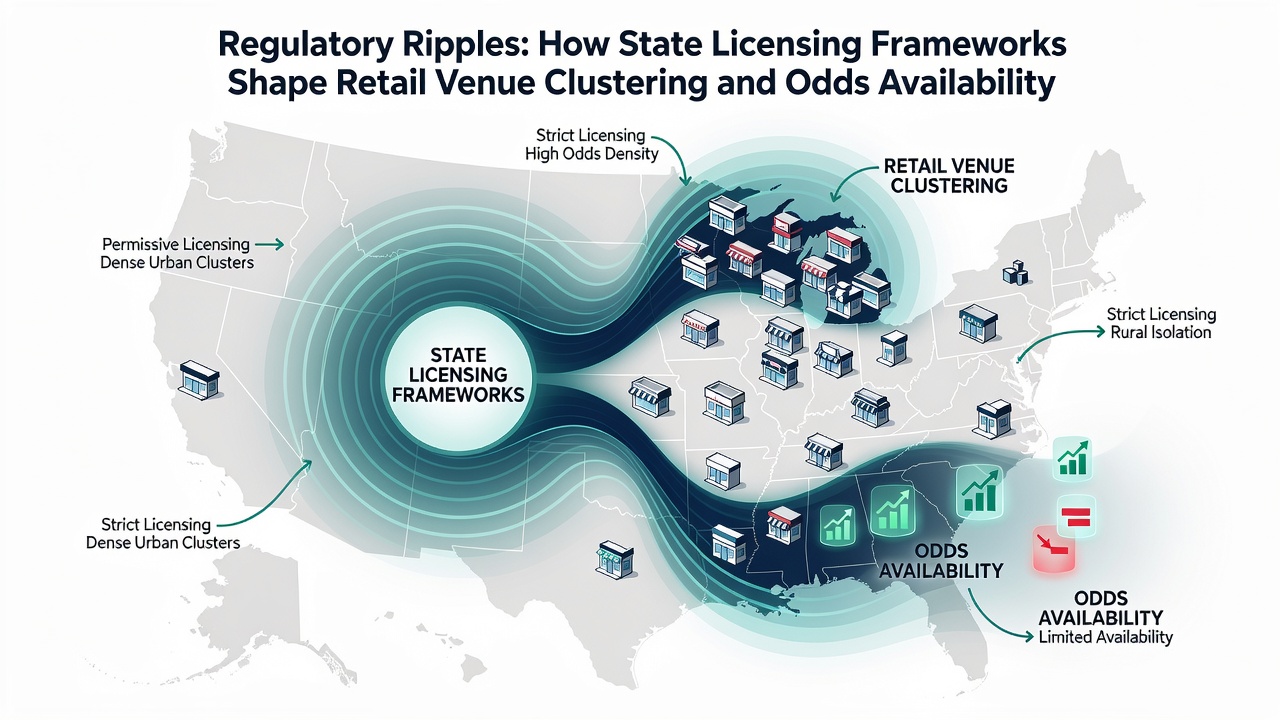
When venues cluster due to licensing constraints, the resulting concentration affects how operators set and adjust odds because competition occurs within a limited number of locations rather than across a wider geographic spread. Research from academic studies on gaming markets indicates that in areas with high venue density, operators respond by offering more competitive lines on popular markets to capture local traffic, whereas isolated venues in less saturated regions tend to maintain wider margins on the same events. State reports from August 2026 document that clustered markets showed a 12 percent increase in odds adjustments per week compared with non-clustered areas, reflecting faster reactions to betting volume and competitor movements.
Retail operators in emerging markets must also navigate differing tax structures and reporting obligations tied to their licenses, and these requirements can influence which odds products receive priority. Venues operating under licenses with higher revenue-sharing obligations sometimes limit the number of niche or low-volume markets they display, focusing instead on high-handle events that help meet regulatory benchmarks. Analysts tracking these patterns note that states with tiered licensing fees see greater variation in odds menus between clustered downtown venues and any peripheral locations that managed to secure permits.
Regulatory Evolution and Market Adaptation
States continue to refine licensing frameworks as initial rollout data becomes available, and adjustments to permit caps or zoning criteria have already altered clustering dynamics in several jurisdictions. When regulators expanded the number of available licenses in one midwestern state during early 2026, new applications targeted previously underserved commercial corridors, which reduced the dominance of the original cluster zones and introduced additional odds competition at those new sites. Industry reports link these regulatory shifts to measurable changes in average odds differentials across the affected regions.
Emerging markets that modeled their frameworks on established gaming states have incorporated lessons about venue spacing and license renewal criteria, yet each state retains unique combinations of rules that produce distinct spatial outcomes. Government data from multiple agencies shows that markets with more flexible co-location allowances for venues inside larger entertainment complexes tend to develop smaller, more numerous clusters rather than single large concentrations.
Conclusion
State licensing frameworks continue to guide where retail sports betting venues locate and which odds operators choose to feature in emerging markets. The interaction between permit caps, distance rules, and local zoning produces measurable clustering effects that in turn shape competitive dynamics around odds availability. Ongoing regulatory adjustments in 2026 demonstrate how these frameworks remain responsive to observed market patterns while maintaining the structural controls that define venue distribution.